






ECA calls on Government to reform and rebalance energy levies and avoid cost of living crisis
Leading electrical and engineering services trade body ECA has responded to Ofgem’s announcement on 3 February 2022 that the energy price cap will rise by 54% to £1,971. ECA welcomes Rishi Sunak’s action to help taper the price rise by supporting middle- and lower-income households, but this is simply not enough.
Government must urgently address the inequalities between gas and electricity levies, and reduce our reliance on imported natural gas from countries such as Russia.
ECA Energy Solutions Advisor Luke Osborne said, “The severity of this announced energy price hike, and the threat this poses to millions of families across the country, can be remedied if the political will is there. While Rishi Sunak’s proposals will provide some respite for 80% of UK households, this will only be temporary. Longer term plans must be put in place to truly mitigate the cost of living crisis.
“Inequalities in the UK taxation system mean electricity is expensive and gas is cheap. Currently, electricity prices per KWh are around four times higher than gas. In the past, when electricity was more carbon intensive, this approach might have been logical.
“But renewable electricity generation is now cleaner than gas and projected to emit only half of the emissions resulting from heating from fossil fuels by 2025 (source: https://www.gov.uk/government/collections/carbon-valuation--2). The outdated levy structure does not reflect this.
“We are calling on the Government to urgently address the inequalities between gas and electricity levies to reflect the falling carbon intensity of electricity. This single move will have the effect of reducing fuel poverty, be good for business and crucially good for the environment.”
Currently, 23% of household electricity bills go towards social and environmental policies, while only 3% of gas bills go towards these.
Reducing levies on electricity will have the added effect of reducing the country's dependency on imported natural gas. This will prevent further exposure to volatility in global markets, making energy prices less vulnerable to price spikes. It would also make the UK less reliant on supplies from other countries, such as Russia.
ECA has also called on the Government to reduce VAT on battery storage systems, solar panels and heat pumps to encourage uptake and make it even more cost effective for households to make the switch to these technologies and feel the benefits of reduced energy bills in the long run.
For more information, see Energy price crisis: ECA calls for energy levy reform.
ECA works closely with industry and the Government to influence the development of energy-related policy, including the drive to net zero. It promotes energy efficiency, renewable power, and the development of battery storage as a means to promote lower costs and greater energy security.
This article was originally provided as a press release. It was distributed on 3 February 2022.
--ECA
[edit] Related articles on Designing Buildings
Featured articles
Check out some of the best features and news from Designing Buildings as well as key stories from around the web.

Why construction can't afford to ignore the skills gap.
Building Safety Regulator, 19 August

Gill Kernick appointed Independent Chair of Residents’ Panel.
Connecting knowledge, technology and conservation
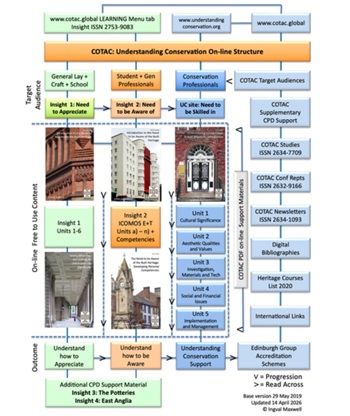
Building competence for the future of built heritage.
Building Regulations and Building Safety Act

CIOB publishes free advice for non-domestic clients.

Building Safety Newsletter from MHCLG.

An extraordinary record of steel engineering worldwide.
Households living near new pylons to save on bills.

ECA warns growth must not outpace grid capacity or skills.
The role of the client and decision making

CIOB response to built environment professions call for evidence.
Construction's sustainability reporting revolution
Tracking upfront embodied carbon with digital tools.
ECA welcomes procurement reforms
Public spending must back British jobs and skills.
Campaigning for Edinburgh: the Cockburn Association 1875-2049

The role of the civic voice in protecting character. Book review.
Comments
Our mistake was comparing the cost of green electricity with fossil fuelled electricity instead of gas. Green electricity has a long way to go before replacing gas. Taxing gas may slow the development of green electricity technologies.